Stanford University School of Medicine Lucile Packard Children's Hospital Stanford Hospital & Clinics Northern California Cancer Center
Stanford Cancer Center About SCC How You Can HelpNews & Events
Find a Physician/Researcher
Sitemap
Research Programs
Core Facilities

Tissue Procurement Facility Share Resource

http://tissuebank.stanford.edu

Facility Director: Jonathan R. Pollack, MD, PhD
Faculty Advisor: Jeffrey A. Norton, MD

Contact
Jonathan R. Pollack, MD, PhD
Director, Tissue Procurement Facility
269 Campus Drive, CCSR-3245A
Stanford, CA 94305-5176
Tel: 650-736-1987
Fax: 650-736-0073
Email: pollack1@stanford.edu

Overview

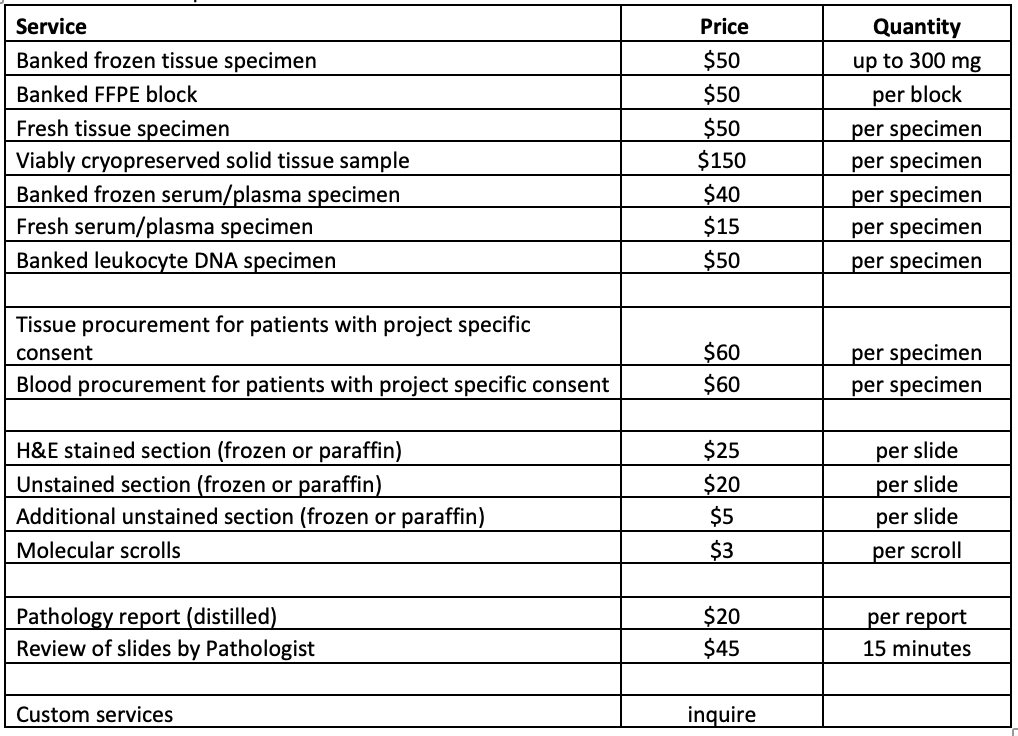
The overall objective of the Tissue Procurement Facility (TPF) is to collect and provide needed tissue specimens to Stanford Cancer Center investigators to support their cancer-related research. TPF activities and services include collecting and banking freshly frozen tumor and normal tissues from excess surgical material and from autopsy, providing fresh tumor tissue for viable cell studies, processing and banking serum specimens from cancer patients, maintaining a tissue database with links to clinicopathological data, providing histological staining and pathological review, coordinating patient consent and ensuring regulatory compliance.

Services

Procurement and analysis services

  • Tissue procurement
    The TPF procures tumor and normal tissues from excess surgical materials and from autopsy. Targeted collections are carried out to meet specific investigator needs. In addition, a broad spectrum of tumor types is banked to meet anticipated future needs of investigators.
  • Serum procurement
    The TPF collects, processes and banks freshly frozen serum (or plasma) from cancer patients. Blood is typically drawn pre-operatively, and banked serum is provided to investigators for biomarkers studies and related research.
  • Histological analysis
    The TPF provides pathological expertise and services, including the preparation of stained and unstained tissue sections, and the expert review of specimens, stained slides and pathological diagnoses.

Support Services

  • Coordinating patient consent
    The TPF has recently implemented a Health Insurance Portability and Accountability Act (HIPAA)-compliant "universal" (also known as "blanket") patient consent protocol for tissue procurement. Consent is typically obtained preoperatively, at or near the time of surgical consent.
  • Database management
    The TPF manages a database to track tissue specimens and associated clinicopathological information. This custom database, the STRIDE (Stanford Translational Research Integrated Database Environment) tissue banking application, was developed and is maintained by the developing shared resource, Cancer Informatics.
  • Quality assurance 
    Quality is ensured at multiple levels. Prior to distribution of tissues, a pathologist evaluates an H&E-stained frozen section of each specimen to confirm the histological diagnosis, to estimate the percent tumor and to document the presence of normal epithelium, necrosis, fibrosis, etc. To evaluate tissue quality, the TPF periodically surveys investigators regarding the intactness of extracted molecular components (e.g., rRNA).
Operation

The TPF is located in 1,000 square feet of laboratory space on the first floor of 800 Welch Road. Offices for the clinical coordinator and tissue technician are across the hall from the laboratory, and tissue culture facilities are on the second floor. Distribution of tissues to investigators and use of TPF equipment occurs at the facility. The facility hours are from 8:30 am to 5:30 pm, Monday through Friday. The working hours of the two tissue technicians are staggered to accommodate tissue procurements any time between 8:30 am and 7:00 pm on weekdays, ensuring capture of late-afternoon surgeries. The on-call surgical pathology resident also is available (for a fee) to accommodate infrequent “after-hours” tissue procurements.

Procedures

To access tissues or other services, the investigator is encouraged to first contact the director (Dr. Pollack) to discuss and assess the general feasibility of the service request. The investigator then submits to the facility a completed Service Request Form (http://tissuebank.stanford.edu), which is reviewed by two committee members of the TPF advisory board. If additional expertise is required, the director may enlist a third ad hoc faculty member who is not on the committee. At the next committee meeting (currently held monthly), the service request is discussed, and the recommendation voted on by the committee. The investigator may appeal the advisory board’s decision in writing to the TPF director, and if the decision regarding the appeal is unsatisfactory to the investigator, a second appeal may be made to the Cancer Center associate director of shared resources. For approved requests, specimens are distributed only after receiving a copy of the investigator’s IRB/PRMS approval letters and a signed Letter of Research Agreement.