Basic and Translational Research Facilities
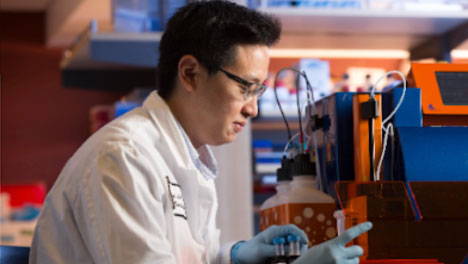
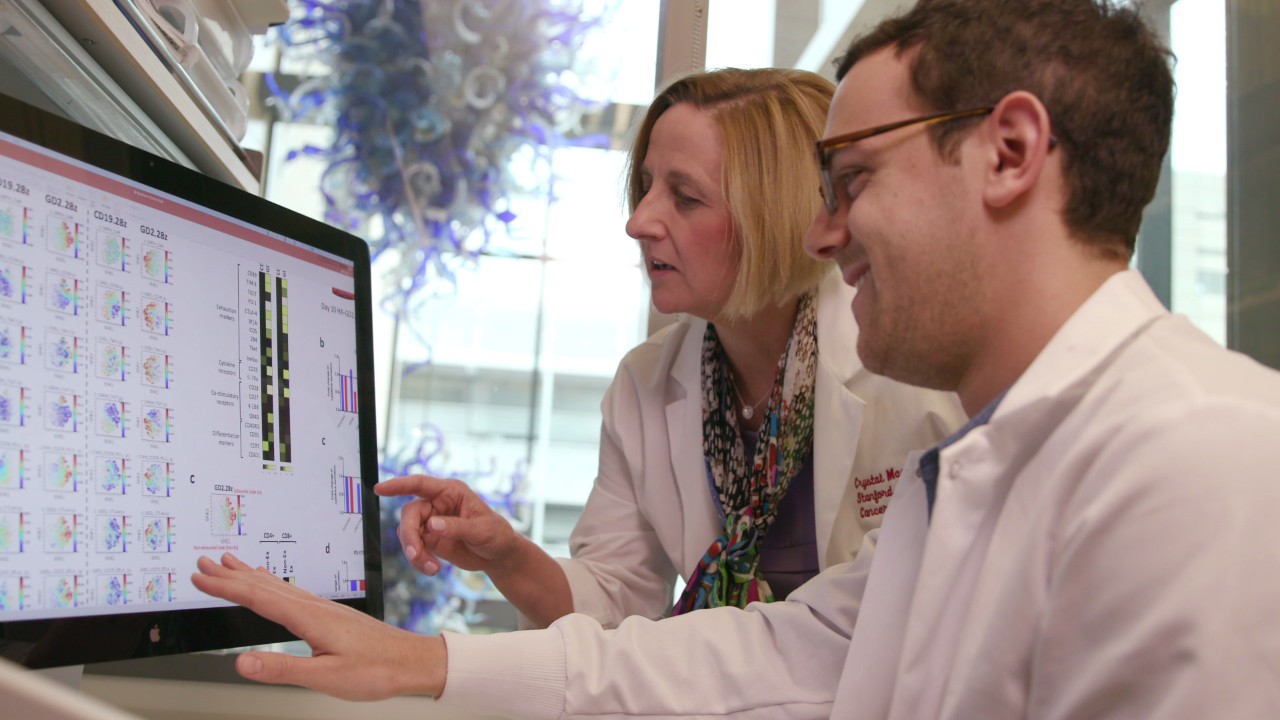
Basic and translational research into the underlying biology of cancer and its treatment takes place throughout the medical school’s closely integrated campus. In addition to lab space in the Edwards and Grant Science Buildings, SCC investigators carry out their work using the following facilities:
Arastradero Complex
The School of Medicine has entered into a 15-year contract for the Arastradero Complex in Palo Alto. Located four miles from campus, the complex’s two buildings offer 75,000 square feet of newly renovated research and office space, as well as an animal care facility. Building 1 of the complex has been designated for the Comprehensive Cancer Center and Stem Cell Institute. This facility will house the laboratories of Irv Weissman, MD, Michael Clarke, MD, and other researchers in cancer gene discovery, genomics and experimental therapeutics.
Beckman Center

Founded on the principle that innovation transcends traditional departmental boundaries, Stanford's Beckman Center for Molecular and Genetic Medicine seeks to integrate laboratory research with clinical medicine by building bridges between the departments of molecular and cellular physiology, developmental biology and biochemistry, among other academic programs. Opened in May 1989, this 175,000 square-foot facility also houses the Howard Hughes Medical Institute, several core facilities, research labs, offices and a fully equipped, 100-person capacity lecture hall.
Center for Clinical Sciences Research
Located next door to the Beckman Center, the Center for Clinical Sciences Research (CCSR) promotes translational research by locating basic science and clinical research laboratories in close proximity. Specialties housed in the 214,000 square-foot facility include molecular pharmacology, immunology, genetics, oncology, anatomy, dermatology, bone marrow transplantation, pathology, surgery, radiation and oncology. 489 lab benches, 12 seminar rooms, six conference rooms and two 50-participant auditoriums provide accessible meeting and event space for collaborative efforts.

Clark Center
The James H. Clark Center fosters an unprecedented degree of collaboration between Stanford researchers in medicine, engineering, computer science, physics and the biological sciences. With its warehouse-like lab spaces and shared equipment rooms, the facility caters to the dynamic research needs of diverse faculty while serving as the central hub for the innovative Bio-X program.
Lucas Center

The Richard M. Lucas Center for Magnetic Resonance Spectroscopy and Imaging is one of the few centers in the world with major centralized resources devoted to research in magnetic resonance imaging (MRI) and spectroscopy (MRS). The Center has pioneered MRI/MRS technology while developing new techniques that benefit patients with cancer.
Medical School Lab Surge Building
Contiguous with the Lucas Center, the Medical School Lab Surge (MSLS) building provides laboratory and office space for investigators from the Departments of Radiology, Psychiatry, Neurology, Neuroradiology and Surgery.
Sherman Fairchild Research Building

The Sherman Fairchild Research Building houses laboratory and office space in support of basic and clinical science research in structural biology, biophysics, neurobiology and microbiology and immunology, among other disciplines.
SIM 1
When completed in 2009, the new Stanford Institutes of Medicine 1 (SIM 1) will provide 120,000 square feet of research space for laboratory-based investigators and faculty from the Stanford Cancer Center and the Stem Cell Institute. Sitting next to the CCSR and the Beckman Center, it will also house the Institute of Neuroscience, an animal care facility and other core facilities serving both the Cancer Center and the two Institutes.